Hamburg–Berlin railway renewal: Working hard to build a robust rail network
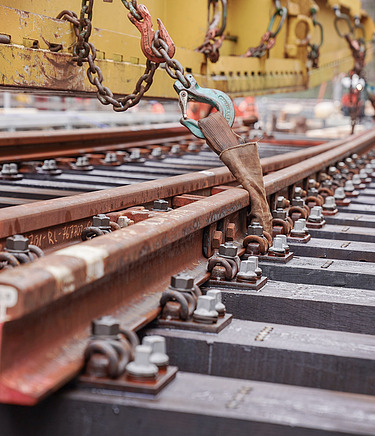
Rail transport in Germany is growing, but the rail network is reaching its limits. High utilisation rates and outdated infrastructure are leading to disruptions and delays in passenger and freight transport. Yet as one of the most climate-friendly modes of transport, rail plays a crucial role in sustainable mobility. At STRABAG, we support the effective expansion of climate-friendly mobility in Germany. After all, only stable rail networks make rail an attractive option for passengers and freight.
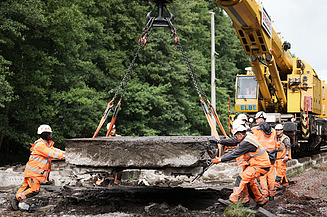
We are driving rail modernisation
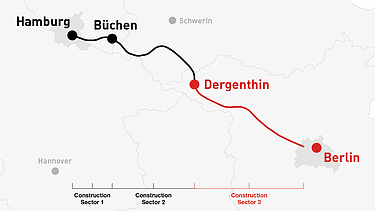
On behalf of DB InfraGO, Deutsche Bahn’s infrastructure company, we have renewed key rail infrastructure on the Hamburg–Berlin route. The route is one of Germany’s most important long-distance connections and has been fundamentally modernised as part of so-called corridor renovations. These involve comprehensive overhauls of heavily used sections of track. Since mid-June 2026, the route between the two major cities has been back in operation – ensuring stable rail services in the long term.
When traffic stops, major works begin
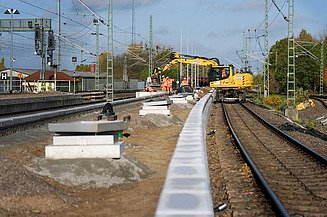
Working in a joint venture with DB Bahnbau GmbH, we modernised the 120-kilometre section from Dergenthin to Berlin. Around 150 STRABAG colleagues turned the route into a major construction site. At times, five work trains and eleven excavators were in operation simultaneously.
Hamburg – Berlin railway renovation: Our key works at a glance:
- Replacement of the high-maintenance concrete track with a more flexible ballast track
- Optimisation of the route layout for parallel train movements
- Modernisation of Wittenberge station with an additional platform and barrier-free access
- Installation of modern catenary technology, including overhead lines, cable systems and signalling technology
Frequently asked questions
-
Why is the German rail network under heavy strain?
The German rail network is currently operating at full capacity in many places. Over the past few decades, the volume of rail traffic in Germany has risen significantly faster than investment in rail infrastructure. A high proportion of outdated infrastructure is leading to an increase in disruptions, delays and cancellations – particularly on heavily used main routes such as Hamburg–Berlin.
-
How will the German rail network become more reliable in the long term?A more reliable rail network is achieved through the comprehensive and long-term modernisation of the rail infrastructure. By renewing tracks, points, stations, as well as signalling and safety systems, operational disruptions are minimised, delays are reduced and the overall capacity of the rail network is increased.Over 100 billion euros is set to be invested in Germany’s rail infrastructure by 2029. In parallel, the federal government and Deutsche Bahn are modernising over 4,000 kilometres of heavily used lines as part of so called corridor renovations by 2035. Over 40 railway lines will undergo comprehensive modernisation – for the first time involving full closures lasting several months.
-
Which corridor renovation projects is STRABAG involved in in 2026?From July 2026, STRABAG will also be involved in the corridor renovation of the line on the right bank of the Rhine. We will be modernising the section between Troisdorf and Unkel and carrying out work on track construction, civil engineering and catenary systems. The right bank of the Rhine line stretches for around 80 kilometres in North Rhine-Westphalia and will undergo comprehensive refurbishment within five months.
Factsheet

Factsheet railway renewal