Sustainable mobility
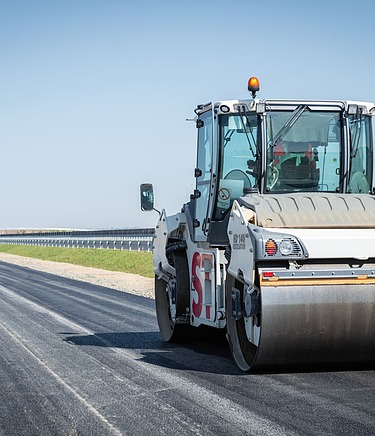
The European transport sector is one of the biggest sources of emissions, contributing significantly to the overall carbon footprint of the continent. At the same time, people and goods are more mobile than ever before. Mobility is the foundation of economic strength, security of supply, and Europe's global connectivity. This makes it all the more important to make transport more sustainable. Modern, resilient transport infrastructure plays a central role in this.
STRABAG builds modern transport infrastructure
The German government's decision to set up this special fund sends a clear message: investment in rail networks, bridges, roads, waterways and tunnels is essential for creating transport routes that are future-proof. At STRABAG, we have many years of expertise and deliver infrastructure projects that actively support this transition. We build roads, bridges, railways and waterways, laying the foundations for economic development and social cohesion.
Rail networks: In the fast lane across Europe
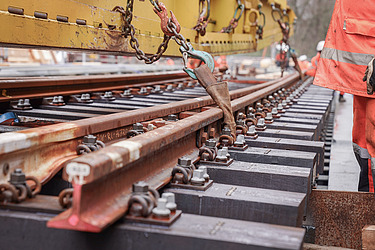
When people travel by rail in Europe, they often find that the transport infrastructure is overburdened and not fully interconnected. Nevertheless, trains are one of the most sustainable ways to travel. If the rail network is consistently expanded and modernised, trains can make a decisive contribution to reducing emissions in the transport sector.
In Germany, the federal government and Deutsche Bahn are now responding with comprehensive refurbishments. Take the Hamburg-Berlin rail line, for instance. This is one of the country's busiest routes, and we have upgraded its key rail infrastructure.
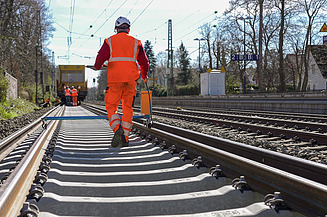
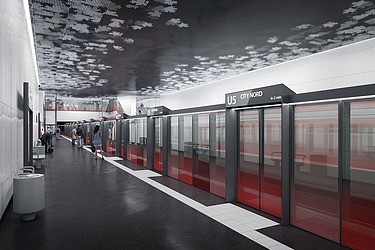
The European Commission's goal is to double cross-border rail traffic by 2030. A key step towards achieving this is the expansion of high-speed rail lines. In the Czech Republic, for instance, we are upgrading a section of the Brno–Přerov railway line to a double track. In future, trains will be able to travel at speeds of up to 200 km/h – twice as fast as before. Improved connections strengthen Europe’s connectivity and establish rail as a viable alternative to cars and planes. The construction of the new Metro Line 5 in Hamburg shows that sustainable mobility starts with proper infrastructure. By using sustainable construction processes and low-carbon building materials, Hamburger Hochbahn aims to reduce CO₂ emissions by 70 per cent on this major tunnel construction project. STRABAG subsidiary ZÜBLIN is helping to build an extension to the local transport network with a central, fully automated east-west link.
Safe travel on roads and bridges
Roads remain essential for mobility in Europe. Cars and trucks are still the most important form of transport. But at the same time, road infrastructure is facing some major challenges. In Germany alone, 25,000 kilometres of motorway need refurbishing. This makes the efficient maintenance of transport routes all the more important. At STRABAG, we work closely with our clients to promote the targeted reuse of materials, such as through asphalt recycling, to keep raw materials in circulation and reduce CO₂ emissions.
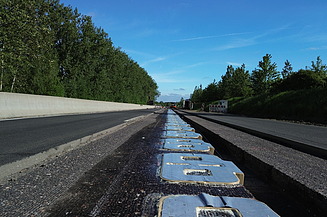
Modern transport infrastructure allows for new mobility solutions. One such solution is electric mobility, which is a key technology for low-emission transport. In the future, innovative technology could enable electric cars to be charged wirelessly as they drive or park. We are testing an inductive charging method for this purpose together with the manufacturer Electreon, ensuring effective installation and optimal system communication.
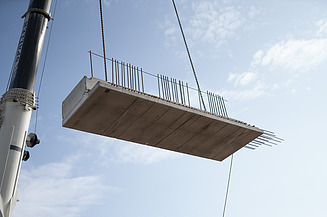
The need for modernisation is particularly evident in bridge construction. Many European bridges now need to be replaced to cope with increasing traffic volumes. Within Germany, 18,000 motorway bridges require refurbishment. However, by 2024, only 40 per cent of the planned refurbishments had been carried out. Bridge refurbishments often result in long closures and significant traffic restrictions. With the STRABAG modular bridge, however, we integrate planning and implementation at an early stage. Thanks to a high degree of prefabrication, we are able to enable the faster renewal of infrastructure in need of refurbishment.
We achieve sustainable mobility in various ways. A modern and connected transport infrastructure is crucial.
-
What does "sustainable mobility" mean?
Sustainable mobility means designing transport infrastructure that is efficient, reliable and reduces climate impact. This involves shifting motorised traffic away from the roads and towards lower-emission modes of transport such as rail. At the same time transport networks must be expanded to become more efficient and resilient.
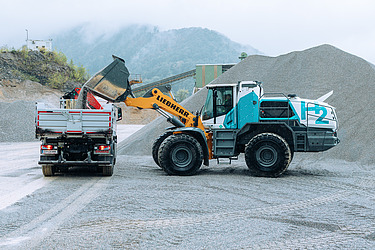
Switching to electric powertrains also plays an important role. This applies not only to the public transport sector, but also to STRABAG. We are gradually electrifying our vehicle fleet and testing various drive technologies for construction machinery. -
Why do we need sustainable mobility?In Europe, the transport sector accounts for around a third of total final energy consumption. This is the energy used directly by vehicles. Consequently, the transport sector is responsible for around 25 per cent of CO2 emissions, which the EU intends to reduce by 90 per cent by 2050. In order to achieve Europe’s climate targets, transport systems must become more efficient and emit fewer pollution.