Decarbonisation of construction
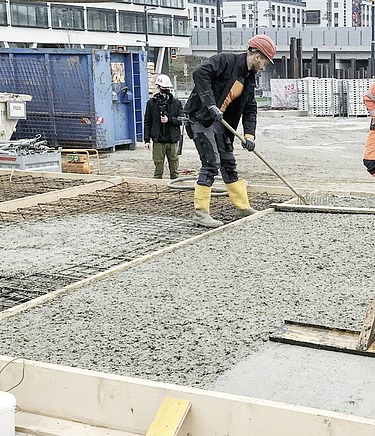
The immense global emissions of carbon dioxide (CO2) and other greenhouse gases in the atmosphere are causing progressive global warming and the associated climate change. The reason for this is a widespread global economy and way of life that is still largely based on the use of fossil fuels. As an energy-intensive industry, the construction sector has a significant share in global CO2 emissions.
This means that, our industry has a key role to play in the necessary decarbonisation to fight climate change. As a leading construction company, STRABAG is addressing this challenge by actively taking responsibility for the CO2 emissions within our control. In addition, we are working alongside our partners and clients to further decarbonise our value chain.
What does decarbonisation mean?
With our sustainability strategy adopted in 2021, we have set ourselves the ambitious goal of achieving climate neutrality in our own operations by 2040. In addition, we are constantly working with our partners to reduce further greenhouse gas emissions throughout our value chain. Decarbonisation is - simply explained - the route to the goal. This means systematically substituting and reducing fossil fuels by low-emission, ideally CO2 -neutral alternatives - in short, saying goodbye to oil, coal and natural gas as energy sources. This is a huge challenge that we can only master together: in cooperation with our clients and partner companies in the supply chain, legislators and authorities.
Minimizing CO2 emission at all levels
Decarbonszation is a high strategic priority for STRABAG. We are implementing targeted inititives across the entire Group to minimise out all the stops across the Group to minimise CO2 emissions, or at best to avoid them altogether. Our decarbonisation measures are diverse: For example, we are systematically focusing on the use of renewable energies (photovoltaics, wind power, etc.). Together with partners, we are driving forward the testing of innovative and sustainable drive concepts and fuels (e.g. green hydrogen, electric, HVO diesel) for construction machinery. We are gradually electrifying our vehicle fleet and pursuing high decarbonisation targets in the planning and construction of new Group buildings, for example by optimizing energy requirements and consumption. And together with our clients, we carry out construction projects specificallyusing climate-friendly building materials (e.g. wood, CO2 -reduced concrete and steel).