LEAN Construction: The Lean Approach to Building

We use the LEAN Construction way of thinking and working in all our projects. This not only saves us time and money but also makes our work more sustainable. Because you don’t reduce emissions only with new materials or particularly innovative inventions; avoiding waste is another powerful lever for change.
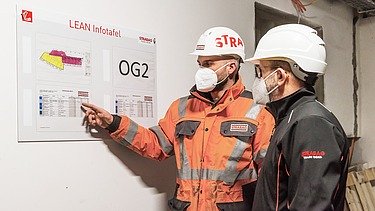
The aim of LEAN Construction is to design everyday workflows so that they run as smoothly and efficiently as possible while maximising value (lean = efficient and streamlined). People, machinery and methods work together in an optimal way.
This enables us to save both time and costs and make the best possible use of available resources without compromising on quality.
Four LEAN principles for sustainable construction projects
Even before construction begins, we use LEAN Construction to set the course for a successful, sustainable building project. We do so by taking an end-to-end view of our construction projects – from planning and design to the actual construction – and arrange the work processes according to the four LEAN principles:

Flow: Continuous flow of all necessary resources and information.
Tact: Identifies repetitive work steps and optimally coordinates them with each other.
Pull: Machines, materials, information and people are assigned to the process as needed.
Zero defects: Mistakes can happen, but they should be discussed and analysed in the team afterwards in order to avoid deficiencies, rectifications and problems in the future.
Lean processes in the design-and-build process
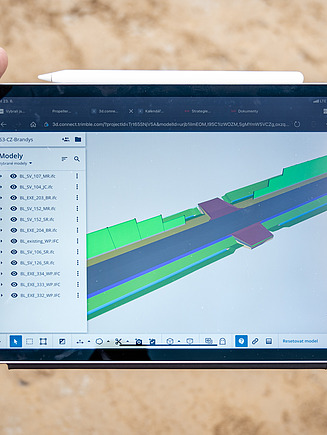
STRABAG plans precisely which resources, equipment or work steps are needed when, where and to what extent. We also examine how a construction site can be designed and managed more efficiently. On this basis, we take appropriate efficiency measures and use LEAN systems for construction process management, for example, to prevent identified waste and to optimally synchronise trades in order to avoid downtimes. This also applies to the use of equipment and construction machinery by reducing unnecessary idle time.
Better integrated, better for the environment!
Our logistics partners are always included in this process. When production facilities and suppliers are properly integrated into the construction site, this not only reduces waiting times and storage space, but also avoids unnecessary heavy traffic and so greatly reduces emissions. With precise planning and timing, we also keep mixing plants running so they don’t have to be constantly restarted when needed. This is often the case with logistics that are not optimally coordinated, resulting in enormous additional energy consumption. At our Kennedy Garden residential project in Vienna, the suppliers and subcontractors were able to announce deliveries using an app in order to best plan their arrival through the narrow access roads depending on the current traffic situation. This helped reduce idles times to zero.

On-site logistics also benefit significantly from LEAN principles. Effective construction process planning helps ensure that materials, equipment and personnel are in the right place at the right time. This includes factors that may initially seem insignificant: for example, the strategic positioning of materials on site can substantially reduce walking distances and transportation requirements, helping to lower emissions.
Learning together through LEAN Construction
With LEAN Construction, we think through our processes and process steps systematically. The knowledge that is gained and the improvements that are achieved are not limited to a single project. They are transferable, scalable – and in the best sense of the word: sustainable.
Factsheet:

The lean way to build