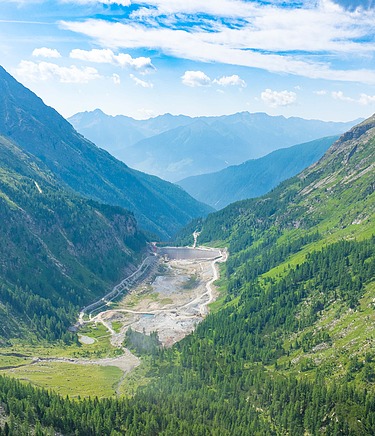
Electricity from wind, solar and hydropower is essential to the energy transition, but it is also changing the demands placed on our energy grids. Modern energy systems cannot rely solely on producing electricity, as there are also days with little wind or sunshine. Alongside electricity generation, the question of how energy can be stored and used flexibly is therefore becoming increasingly important as well.
On behalf of energy service provider Kelag, STRABAG is expanding the Wurten Reservoir in Austria, a key part of the impressive Fragant Hydropower Complex in the Möll Valley. Our work will almost double the reservoir’s storage capacity from 2.7 to 5 million cubic metres of water.
Green electricity for the region
The energy transition requires high-performance storage solutions to balance fluctuations in the electricity grid. Reservoirs offer considerable potential as natural batteries, helping to make regional electricity supplies more reliable and secure. This makes them an important building block for a secure and resilient energy supply. By expanding the Wurten Reservoir and increasing its capacity, we are helping to create sustainable energy infrastructure in Carinthia. The expansion will allow the reservoir to store greater amounts of hydropower energy, which will help balance fluctuations in electricity generation, meet peaks in demand and make renewable energy more reliably available across the region.
-
-
-
Austria leading the way in renewable energy
Hydropower is one of Austria’s most important renewable sources of electricity. According to Wiener Stadtwerke, around 82% of gross electricity generation in 2025 came from renewable energy sources, with hydropower accounting for the largest share at 51%. Austria is therefore already one of Europe’s leaders and can meet a large proportion of its electricity demand with green power on many days. By combining pumped-storage power plants with reservoirs, hydropower brings renewable electricity generation and storage together in a single system.
How does hydropower work?
There are several different types of hydropower plant. Run-of-river plants continuously generate electricity using flowing water. Storage hydropower plants, by contrast, collect water in a reservoir and release it as needed to generate electricity. Pumped-storage power plants work in both directions. To generate electricity, water flows from an upper reservoir through the plant’s turbines, driving them as it passes. When there is surplus electricity in the grid, the water is pumped back up into the upper reservoir. The greater the height difference between the upper reservoir and the turbines, the more electricity can be generated.
Kelag’s hydropower complex Fragant, which includes several storage power plants, operates as a cascade system, with a number of reservoirs at elevations ranging from 500 to 1,700 metres. The Wurten Reservoir is one of the high-altitude reservoirs, storing water over longer periods and allowing electricity to be generated through pump turbines whenever required. This enables the system to respond rapidly to the needs of the electricity grid.
Building on existing infrastructure at 1,700 metres
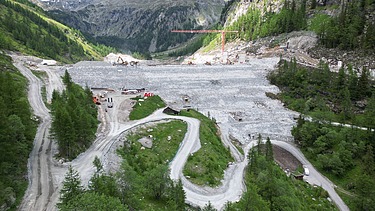
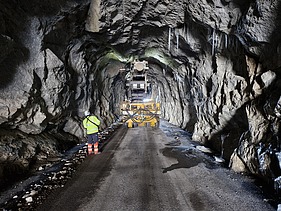
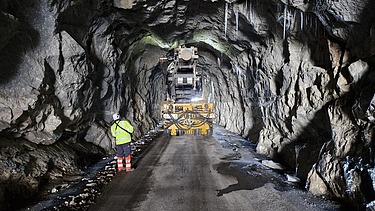
The location of the Wurten Reservoir presents STRABAG’s teams with considerable logistical challenges. Before the expansion work could begin, some of the large construction machinery had to be transported up to an elevation of 1,700 metres along a narrow road with gradients of more than 10%. But getting the equipment there is not the only challenge. Carrying out construction work in the mountains, exposed to wind and weather, is demanding as well.
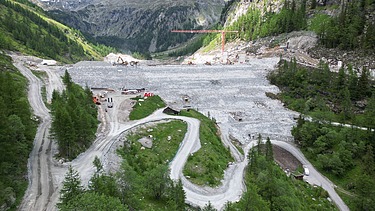
A total of 230,000 m³ of material was excavated from the quarry near the head of the reservoir and used to raise the dam. This also requires numerous existing structures to be adapted to the new level of the reservoir. Among other things, STRABAG is refurbishing the access to the valve chamber from the bottom outlet, as well as the flood relief structure, which serves as flood protection.
Drained completely – twice
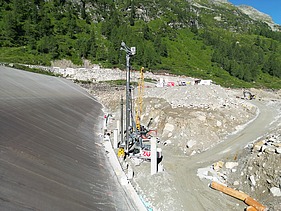
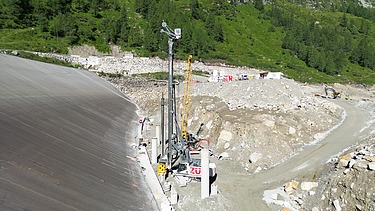
ZÜBLIN Ground Engineering installed 246 bored piles for the project, extending as much as 25 metres into the ground. The piles are essential to ensuring a watertight foundation beneath the dam. Installing them required considerable precision from our colleagues, who had to work to centimetre accuracy in difficult ground conditions.
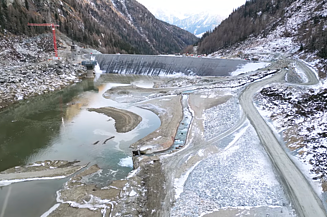
The reservoir had to be drained completely on two occasions for the works – once last year and again at the beginning of this year. Before the onset of winter, it had to be refilled to allow limited reservoir operation to continue. Seventy colleagues from different STRABAG units worked at full capacity to complete the first phase on schedule by the end of 2025. Once the main construction works are completed in 2026, the remaining works and recultivation measures will follow in 2027.
Downloads

Factsheet