Serial housing construction
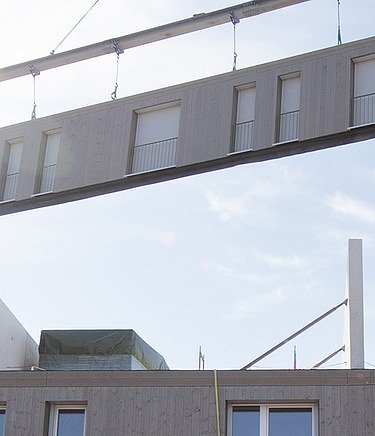
How STRABAG and ZÜBLIN buid affordable housing quickly and sustainably
Affordable housing has become one of the most pressing social and economic challenges in Europe. The 27 countries of the European Union currently face a shortage of approximately 10 million housing units; in 2025 alone, demand is projected to rise by an additional 2.25 million units - and by 2035, more than two million new housing units would need to be built each year across the EU to meet demand. These findings are taken from a recent study commissioned by the European Parliament.
At the same time, actual construction output consistently falls short of this demand. This intensifies the pressure on renters and buyers, particularly in cities with tight housing markets. According to the study, nearly one in ten people across the EU will have to spend more than 40 percent of their disposable income on housing by 2025. At the same time, residential real estate prices rose by about 53 percent between 2015 and 2024.
What is serial construction?
In serial construction, buildings or parts of buildings are designed and constructed according to a fixed system. Walls, ceilings, bathrooms, or entire room modules are prefabricated in a factory. Serial housing construction can make a decisive contribution to sustainably alleviating the strain on the tight real estate market. Through standardized processes, a high degree of prefabrication, and short construction times, housing can be built more quickly, with greater predictability, and more cost-effectively.
Two approaches, one goal
- With MOLENO® Wohnen and TETRIQX, STRABAG and ZÜBLIN offer serial solutions for residential construction. Both approaches help build faster, simplify processes, and use resources more efficiently. Thanks to prefabrication at the prefab plant, material requirements and construction workflows can be planned with significantly greater precision.
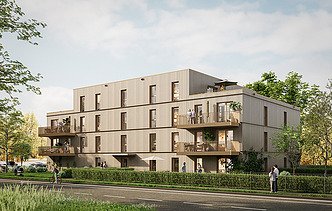
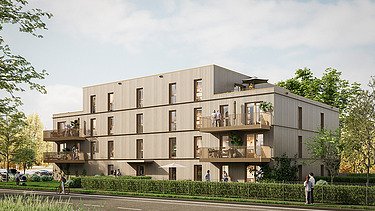
- MOLENO® in Germany allows for greater flexibility in planning. ZÜBLIN’s modular building system provides the basis, but can be individually adapted to plots of land and floor plans. The timber building components, such as LENO® ADD external walls, are manufactured at the ZÜBLIN Timber plant in Aichach.
- With its TETRIQX modular building system, STRABAG is pursuing a more standardized approach in Austria, featuring three clearly defined apartment types. No major deviations are planned. The components are manufactured by Mischek Systembau in Gerasdorf near Vienna.
-
Serial construction with MOLENO® Wohnen: flexible planning
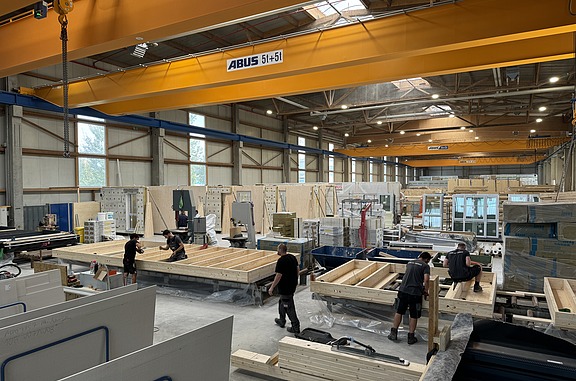
MOLENO® is designed for projects where the lot, floor plan, or building structure present special challenges. The system can be adapted to a variety of conditions.
- 30 percent less CO₂ in the shell construction through the systematic use of wood as a building material for structural elements, compared to conventional concrete construction
- Up to 40 percent shorter planning and construction times compared to non-serial residential construction without prefabrication
- Up to 20 percent cost savings compared to conventionally built buildings
- KfW-40 Efficiency House: Thanks to its energy-efficient design, the building requires only 40 percent of the energy used by a comparable reference building.
-
Serial construction with TETRIQX: clear standards
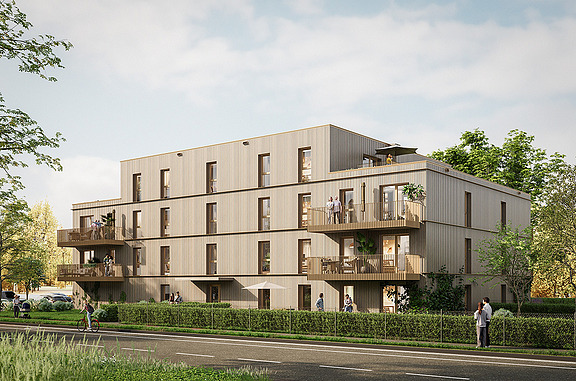
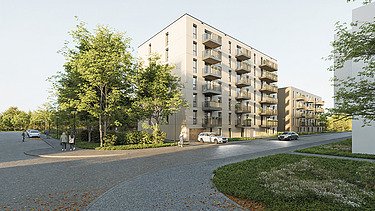
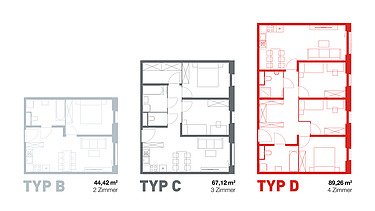
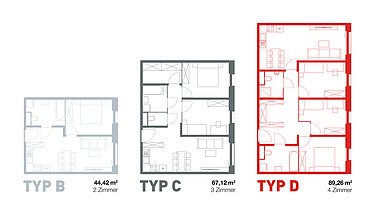
TETRIQX works with three apartment types, each with a fixed floor plan: Type B at just under 45 square meters (m²), Type C at just over 67 m², and Type D at just under 90 m². Depending on the location and project requirements, these types can be freely combined to create residential buildings with three to seven stories. This approach is particularly well-suited for residential construction projects with recurring floor plans and predictable construction schedules.
- Affordable construction costs starting at 1,950 euros per square meter (for a seven-story TETRIQX building).
- Total project duration reduced by up to 40 percent compared to conventional construction methods.
- Lower greenhouse gas emissions over the building’s life cycle compared to conventional construction. Key factors contributing to these savings include factory-produced precast components, the use of low-carbon concrete, and energy-efficient design during operation.
- At least 22 percent lower heating and cooling energy requirements during operation thanks to concrete core activation.
-
-
-
More living space is not created solely through faster construction. It also requires planning approaches that can accommodate different plots of land, requirements, and framework conditions. Serial approaches expand the scope for action in residential construction.
Flexible application for many building types
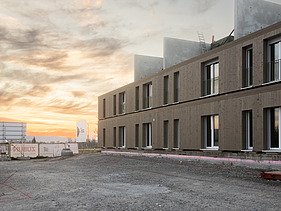
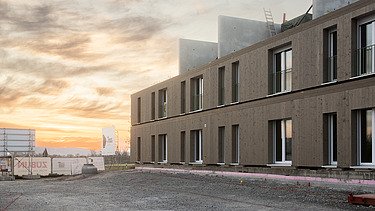
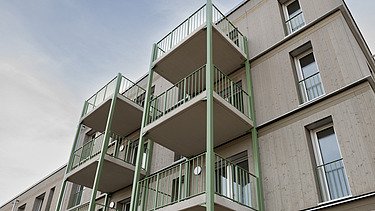
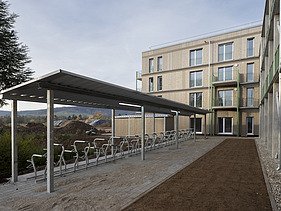
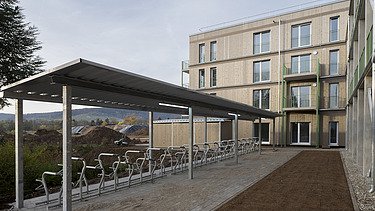
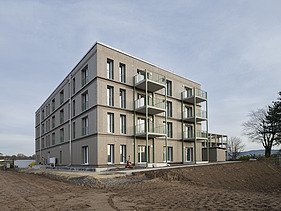
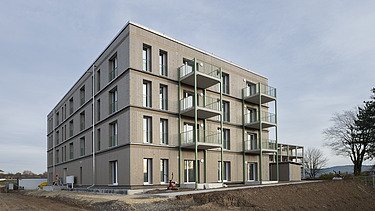
MOLENO® can be used not only in residential construction, but also for schools, daycare centers, or commercial buildings . A project in Kernen im Remstal demonstrates how the system works in residential construction: There, 34 subsidized apartments were built using a serial wood-hybrid construction method within eleven months - two months ahead of schedule.
-
-
-
-
Factsheet:

Factsheet MOLENO
Factsheet TETRIQX