Making housing affordable again

Smart solutions for more housing
Germany alone is now short of around 500,000 homes. What is needed are construction concepts that can be implemented quickly. Here, STRABAG is focusing on the refurbishment and enhancement of existing buildings as well as serial construction.
Can affordable housing also be sustainable?
Affordable housing and sustainability are often seen as mutually exclusive. In fact, however, there are construction methods that combine both objectives: through the intelligent use of existing buildings, standardised construction processes and innovative building systems, new housing can be created more quickly, in a way that conserves resources and is more cost-effective.
Making good use of available resources
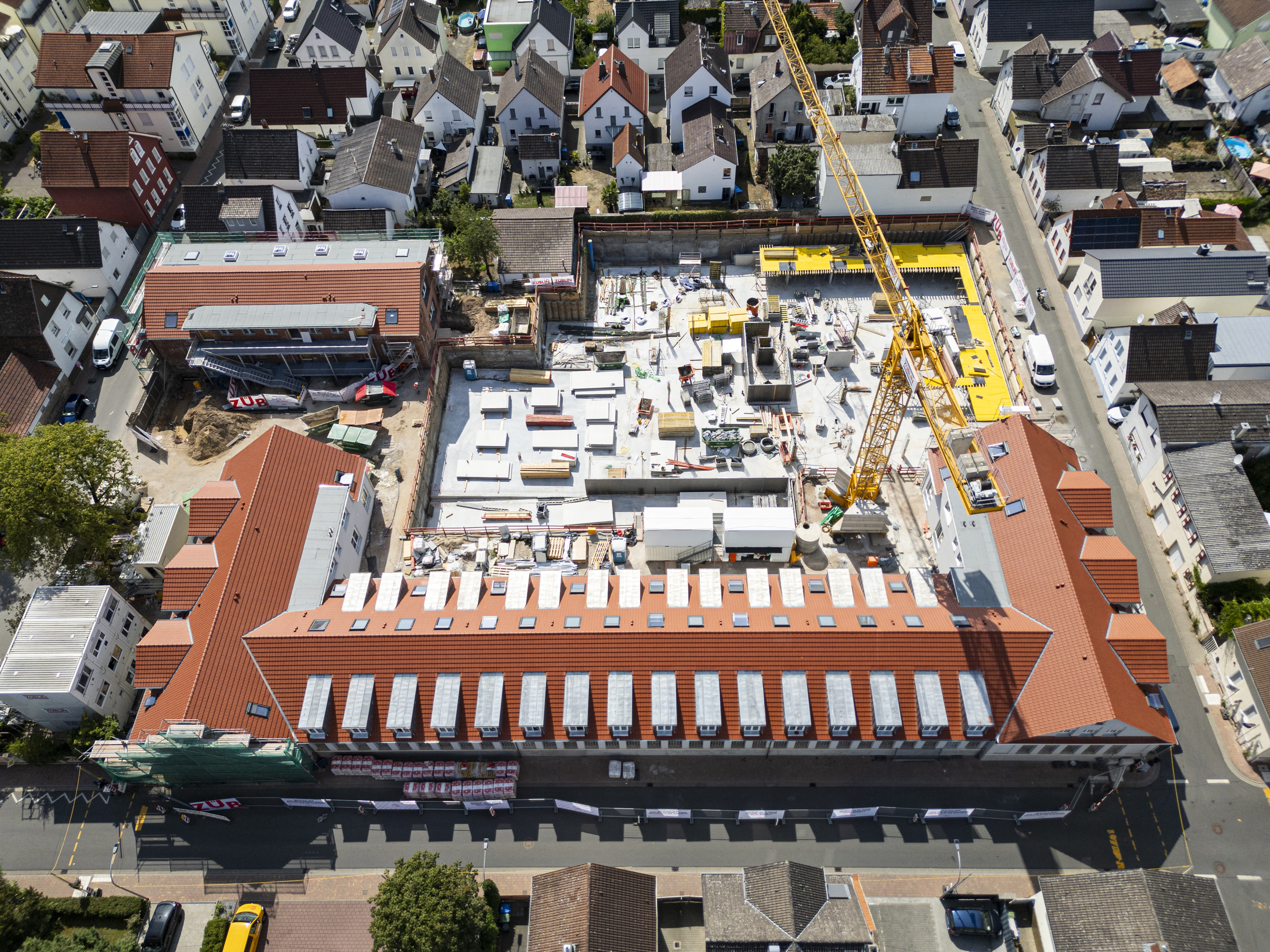
Renovating existing buildings not only creates affordable housing by refurbishing, modernising, extending or repurposing them. In many cases, the consistent use of existing structures also allows housing projects to be realised more quickly and efficiently, as infrastructure and planning permission are often already in place. For example, office buildings that are no longer needed can simply be converted into flats. Making use of existing buildings – also known as ‘grey energy’ – also saves a significant amount of CO₂ emissions that would otherwise be generated by the production of building materials such as concrete when constructing a completely new building. Instead, many building components and materials are reused, which in turn conserves scarce resources.
A quick and cost-effective way to create new living space
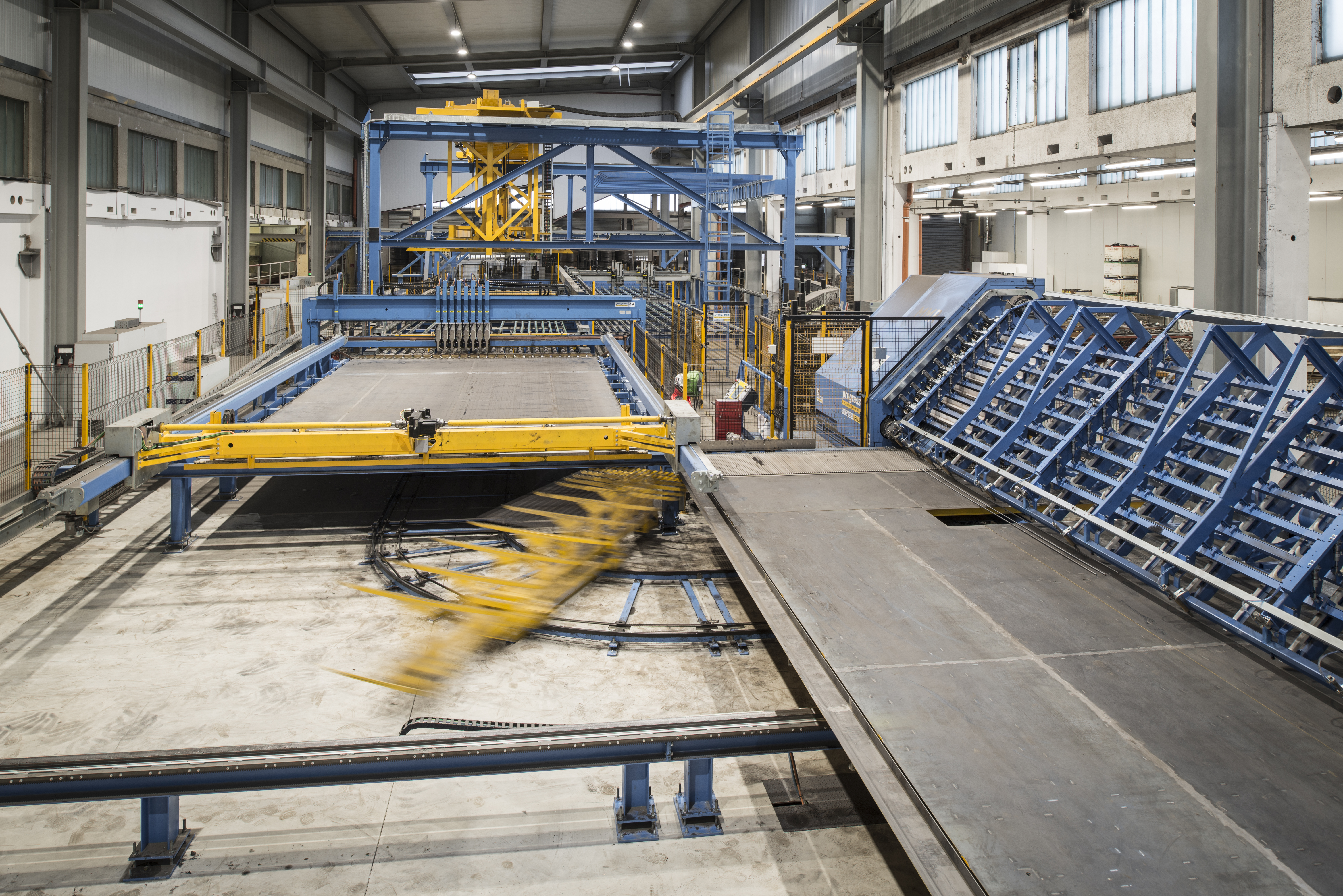
Alongside the reuse and refurbishment of existing buildings, serial construction offers a fast and cost-efficient solution for new housing. Serial residential construction uses standardised components or modules that are prefabricated in a factory and assembled on site. This shortens construction times, improves planning and cost certainty, and enables affordable housing to be delivered quickly and efficiently.
Industrial solutions for residential construction
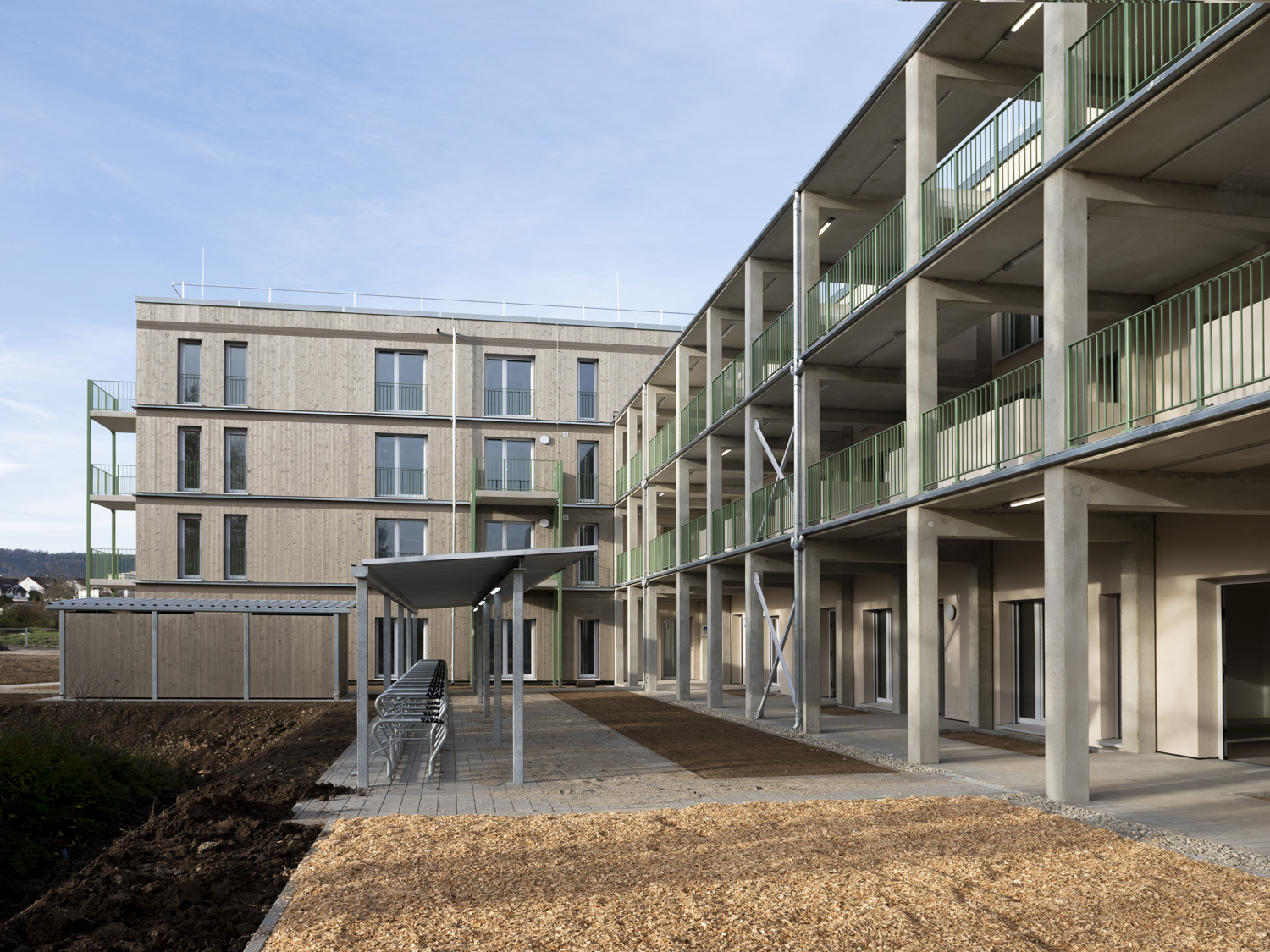
In Germany, STRABAG subsidiary ZÜBLIN uses timber as a sustainable building material in its MOLENO® serial construction system, combining wood with concrete to create a timber-hybrid structure. In Austria, we have established the TETRIQX serial construction product, which likewise consists of industrially prefabricated components. TETRIQX offers three different apartment types B, C and D that can be stacked and arranged side by side in modular configurations to form residential buildings. The two approaches pursue the same goal: to create urgently needed housing quickly, economically and to a consistently high standard of quality.
This is how affordable housing becomes a reality
Building faster, conserving resources, keeping costs under control: these practical examples show how innovative construction concepts make affordable housing possible.
-
-
-
Frequently asked questions about working with existing buildings and serial construction
-
Why are serial residential construction and working with existing buildings becoming increasingly important?
Demand for affordable housing in many cities and metropolitan areas has been growing for years. At the same time, construction costs, land prices and rents are rising, as are the demands placed on sustainability and resource efficiency. Serial construction and the modernisation and conversion of existing buildings address several of these challenges at once: they can help provide housing more quickly, make better use of existing resources and increase the economic efficiency of construction processes. Both approaches will play a central role in creating liveable and affordable cities and metropolitan areas in the future.
-
Why is serial construction regarded as an important means of creating more housing?
Serial construction methods can accelerate projects because many stages of work can take place in parallel. While the foundations are being prepared on site, for example, façade elements, bathrooms or even complete room modules can already be produced in the factory. This can shorten construction times, make costs easier to calculate, use resources more efficiently, reduce weather-related and scheduling risks, and ensure consistent quality standards.
-
Does serial construction automatically mean monotonous architecture?
No. Modern serial construction methods offer considerably more design freedom than earlier industrial building concepts. The aim is not to produce identical, off-the-shelf buildings. Standardisation primarily applies to recurring technical and construction processes, not necessarily to the architectural design. Different façades, floor plans and building heights can be combined to create distinctive residential developments.
-
Why is working with existing buildings so important for the environment and the climate?
The construction industry is undergoing a paradigm shift. Currently, the construction and operation of buildings accounts for 37% of global CO₂ emissions and half of all raw material demand. In view of climate change, resource scarcity, demographic change and increasing urbanisation, it is clear that the focus can no longer be exclusively on new builds. Instead, working with existing buildings – the reconstruction, refurbishment, conversion and repurposing of existing buildings and infrastructure – is becoming increasingly important for sustainable urban development. Retaining and continuing to use existing structures preserves large amounts of embodied energy. Compared with new builds, this saves construction materials, reduces waste, makes use of existing infrastructure and limits both land consumption and soil sealing. Working with existing buildings is therefore an important component of a more resource-efficient construction industry.
-
Refurbishment or new build – which is the smarter option?
At first glance, a new build can often appear more economical. But looking at the full range of costs reveals the advantages of working with existing buildings. Existing structures can continue to be used, saving both time and resources. Many costs associated with demolition, disposal and complex approval procedures can also be avoided. Refurbished buildings can often be brought back into use more quickly, reduce vacancies and tie up less capital. Subsidies and tax incentives can further improve their economic viability. At the same time, modernisation also increases property values and ensures that buildings meet current energy and quality standards. In short, refurbishing existing buildings is often the more economical, sustainable and sensible long-term alternative to new builds.
-
What potential does working with existing buildings offer in Europe?
The potential for working with existing buildings in Europe is enormous, both environmentally and economically. According to a study by Allianz, meeting the EU’s 2050 climate targets for the building sector will require around € 3 trillion of investment in energy-efficient renovation in the residential sector alone across the four largest countries of Germany, France, Italy and Spain. That may sound like an enormous sum, but it is an investment in the future. According to the study, energy-efficient refurbishment and modernisation could create up to 107,000 new jobs over the long term and increase value added in the real estate sector by around € 1 trillion. This shows that working with existing buildings is not only a contribution to climate protection but can also provide Europe with a significant economic boost.
Discover all the flagship projects
Affordable housing is only part of the solution. Find out more about our contributions to the future of Europe.
Take me to ‘Progress’*As at 1 January 2025: TETRIQX with seven storeys. Not included: planning, basements, large outdoor areas, garages, special foundation works and central building services plant. Price per square metre based on weighted UFA.