Alternative drive technology for construction machinery
Why we need low-emission fuels
The construction industry is still lacking comprehensive solutions as to how alternative drive technology can be used on construction sites. This is why STRABAG is testing promising potential: instead of diesel and gasoline, we want to rely on hydrogenated vegetable oils (HVO), electromobility and hydrogen propulsion in the future.
Why do we need alternative engine technology?
Fuels are the largest CO2 emitter at STRABAG – 40 percent of emissions are caused by the use of diesel alone. Our construction machinery requires a large proportion of this. Alternative drive technologies are therefore an important element in reducing emissions. If we switch our construction machinery to low-emission fuels, we can make a big step towards achieving climate neutrality in our own operations by 2040. To achieve this, we need strong partnerships, especially in this sector, because only joint expertise can lead to long-term solutions.
What fuels are available for construction machinery?
We are testing various technologies and fuels in our offices and on our construction sites. Our car pool is already partly powered by electricity, with a growing number of electric devices. In construction operations, we see potential in hydrogen drives, which are significantly more sustainable compared to fossil fuels – both as a fuel cell drive and as a hydrogen combustion engine. HVO offers great potential as a diesel substitute, which is now permitted at normal filling stations.
A selection of our current projects in the field of alternative drive technology:
-
Hydrogen power
Hydrogen power
STRABAG is testing a hydrogen-powered wheel loader at the Kanzelsteinbruch Gratkorn quarry for two years. The hydrogen-powered wheel loader was developed by Liebherr. Instead of conventional diesel, the machine is powered by green hydrogen from a hydrogen filling station built specifically for this purpose in the quarry.
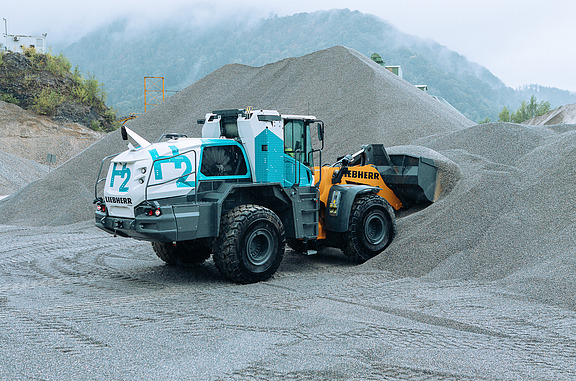
The green hydrogen is provided by Energie Steiermark. Based on internal calculations, the use of the wheel loader can save 37,500 litres of diesel and around 100 tonnes of CO2 annually – the only by-product is steam.
Hydrogen fuel cell
STRABAG is testing a slightly smaller fuel cell wheel loader from Liebherr. The wheel loader is being used as a demo machine in a basic hydrogen study supported by the Austrian Climate and Energy Fund, which is intended to provide experience for future developments.
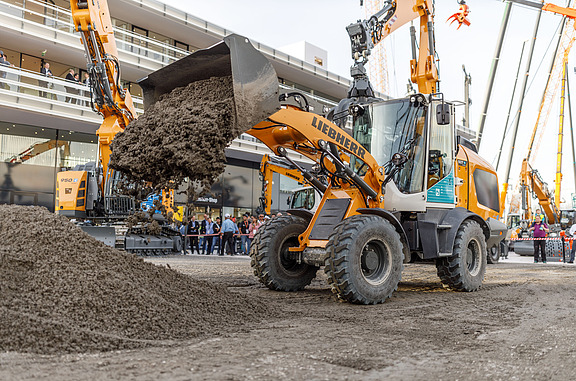
The drive of the fuel cell wheel loader consists of several components. The pressure tank is filled with hydrogen and then, in the fuel cell, converted into electrical energy. A battery serves as a buffer for the energy generated. Finally, two electric motors drive the wheel loader – one for the drive, the other for the hydraulics. As a result, the machine runs electrically and with a high level of operational efficiency. This is the ratio of energy used to usable energy. Overall, the wheel loader has saved around 750 kilograms of CO2 during its operation compared to a diesel-powered machine.
-
Hydrogenated Vegetable Oils (HVO)
Hydrogenated Vegetable Oils (HVO) is a fuel similar to diesel that is produced without fossil resources. HVO is made from animal or vegetable residues or from tall oil, a waste product from cellulose production. The major advantage of this renewable fuel is that it can be added to a normal diesel tank without any conversion and is therefore suitable for a wide range of vehicles. Depending on the type of waste material used, up to 90 percent of CO2 emissions can be saved in comparison to fossil diesel.
Since the beginning of 2024, STRABAG has been testing HVO together with the fuel supplier Hoyer on various construction sites and construction material operations in road construction in Germany. A total of one million liters of diesel will be substituted. The HVO being used is strictly certified as sustainable. -
Electric driver
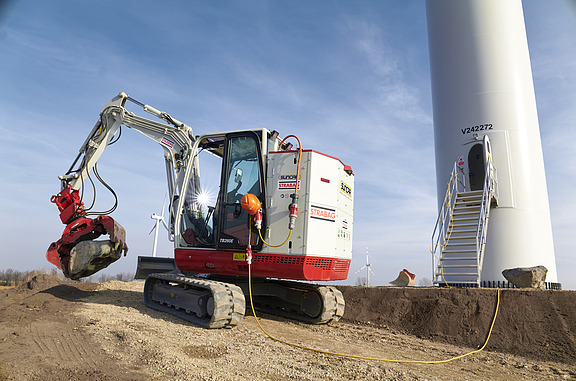
STRABAG is already working with various electrically powered construction machines. It is clear to us that the performance of the equipment is in no way inferior to a diesel vehicle. For smaller excavators or hand-operated equipment such as rammers or vibratory plates, the electric drive can already be put to good use. For example, an electrically powered electric excavator from STRABAG was charged directly on site with green electricity during the construction of a wind farm in Trumau.
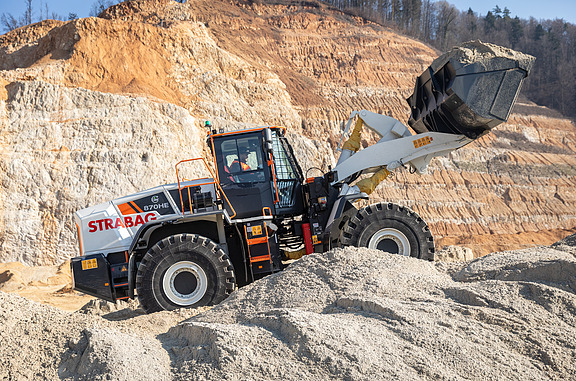
Meanwhile, electric drives are still a rarity in large construction machinery. That is why we are testing various electric vehicles from different companies in day-to-day construction site operations: at our Slovenian quarry in Lukovica, we run a large electric wheel loader from LiuGong. The machine weighs an impressive 25 tonnes – an electric model of this size is a first. According to our project team, the machine is quieter, more comfortable and just as powerful as a diesel-powered machine. The joint venture between ZÜBLIN and Wayss & Freytag is also using such an electric wheel loader on the U5 construction site.
For STRABAG, reducing the energy consumption of construction machinery is an important building block in reducing emissions from construction sites on the road to climate neutrality by 2040. Tests like these under real conditions are needed to evaluate different technologies and their potential.