Climate change mitigation given priority in construction of new U5 metro line in Hamburg
Focus on CO2 reduction: First section being realised for HOCHBAHN by ZÜBLIN and Wayss & Freytag
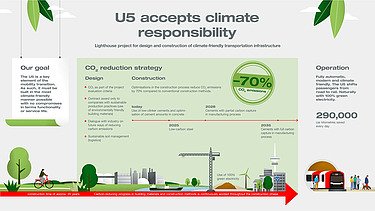
The construction of the new U5 metro line in Hamburg is setting new standards in climate protection. A central focus of the major infrastructure project commissioned by Hamburger Hochbahn AG (HOCHBAHN) is to avoid and reduce carbon dioxide emissions. ZÜBLIN, in a consortium with Wayss & Freytag, is realising the first construction section of the U5 metro line using low-carbon building materials, sustainable construction processes and carbon footprint monitoring throughout the project. The reduction strategy being pursued by the consortium for this large-scale project represents an unprecedented greenhouse gas (GHG) roadmap, the first of its kind in Germany. The climate-friendly realisation of the project over the next two decades should make it possible to reduce CO2 emissions during construction to 850,000 tonnes, 70% lower than the GHG load of approximately 2.7 million tonnes of CO2 from a project realised using conventional construction methods.
-
-

U5 metro line: fast and with zero emissions through Hamburg
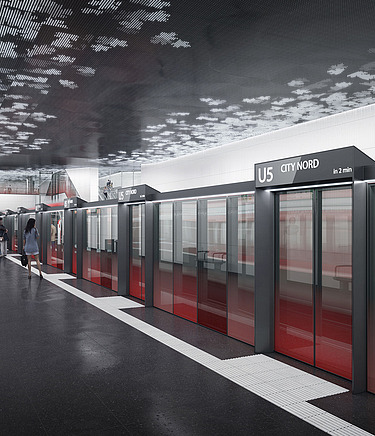
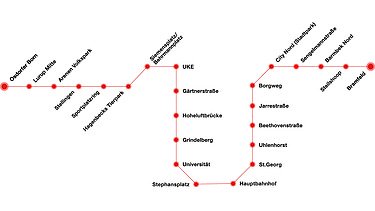
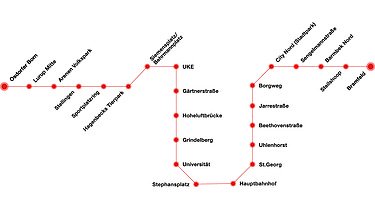
The new U5 metro line across Hamburg is the largest public transport infrastructure project in Germany currently under construction. Hamburg’s fifth metro line will add a completely new east-west axis to HOCHBAHN’s transport network, linking the districts in the east (Bramfeld, Steilshoop) and the west (Lurup, Osdorf and the Volkspark arenas) with the city centre (central railway station) over a distance of around 29 kilometres. The 24 new stations being built as part of the project will offer some 200,000 Hamburg residents new connections to the city’s metropolitan and suburban railway network. The use of pioneering technology will also make the U5 the first fully automatic metro line in Hamburg, enabling flexible and needs-based train scheduling. Once the overall project is completed (in 2040, according to current planning), HOCHBAHN estimates that around 345,000 passengers will use the new line every day to reach their destinations completely emission-free. This makes the U5 a key element of Hamburg’s mobility transition and an important part of the city’s goal of becoming climate neutral by the year 2045.
-
-
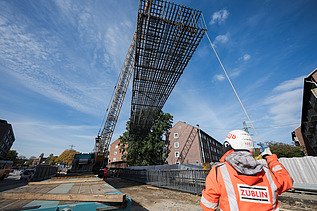
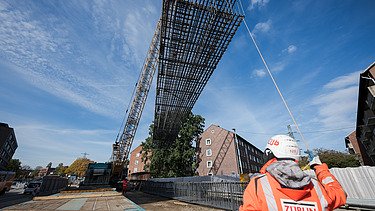
-
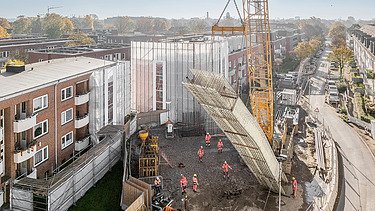
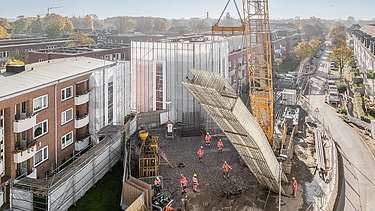
-
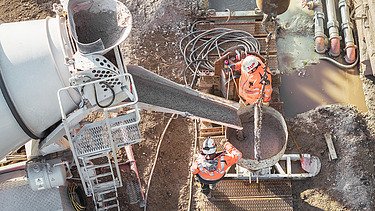
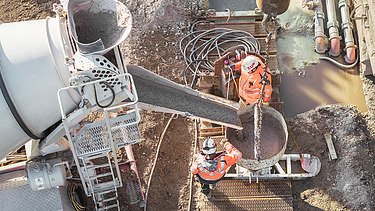
Start in the north-east: ZÜBLIN and Wayss & Freytag realising first section of U5
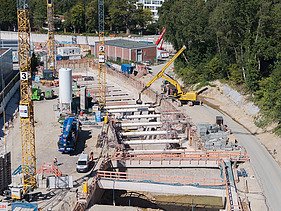
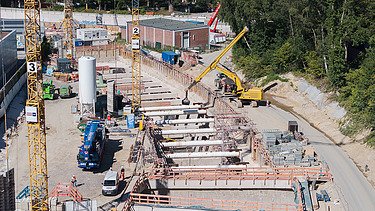
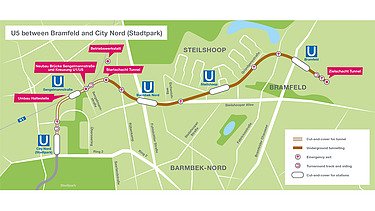
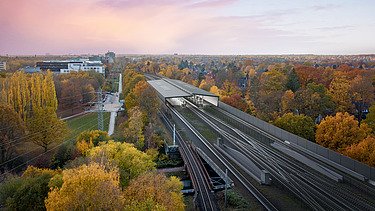
Construction work on this large-scale project has been in full swing in northeastern Hamburg since the official groundbreaking in autumn of 2022, with ZÜBLIN and Wayss & Freytag jointly working on the first construction section of the U5 between Bramfeld and City Nord (Stadtpark). A consortium of the two companies was awarded the contract for two staggered lots (Lots 1 and 2) by HOCHBAHN U5 Projekt GmbH. Four new underground stops (Bramfeld, Steilshoop, Barmbek Nord, City Nord) are being built on the approximately 5.8-kilometre section of the new line. As part of the first construction section, the existing Sengelmannstraße U1 station will also be converted into an above-ground transfer between the U1 and U5 lines. The consortium’s project team is building the section between City Nord and Sengelmannstraße (Lot 1) – including the new stations – using the cut-and-cover method. The approximately four-kilometre-long section to Bramfeld (Lot 2), to be built starting in 2027, will be excavated using a tunnel boring machine.
Material-saving planning for lower carbon emissions
An important factor in reducing harmful emissions is the construction method specified in the design. As a large proportion of the carbon emissions are attributable to the use of reinforced concrete, this important first step is all about minimising material use. In other words: less is more. The engineers at HOCHBAHN U5 Projekt GmbH therefore optimised the planning and design with a focus on material savings and low-carbon construction processes. Top priority, however, was given to avoiding compromises in terms of passenger comfort, functionality and service life. Example: For the U5 tunnel, steel-fibre-reinforced concrete segments are being installed using a tunnel boring machine for the first time in Germany. A special case-by-case approval obtained specifically for the U5 will make this possible starting in 2027 on the first construction phase. This technical innovation is a key component of the CO2 reduction strategy for the U5: compared to standard segments with conventional reinforcement, the fibre solution reduces steel requirements by around 60 per cent – thereby also reducing the carbon footprint of the concrete segments accordingly.
Green electricity, sustainable logistics and climate-friendly building materials
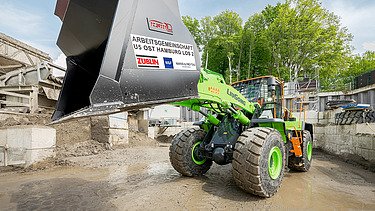
Cement composition a decisive factor for reducing CO2 in concrete
The consortium is focusing specifically on the use of low-carbon concrete during construction of the U5 metro line. The project team is using two key levers here to keep the GHG load to a minimum: reducing the amount of cement in the concrete and using concrete with a low clinker content. Cement is an important part of concrete, affecting curing time and stability. The key consideration for optimising the carbon footprint of the project is therefore to use as little cement as possible (but as much as is technically required). “We are pushing the limits of what is technically feasible here,” says Christian Hoffmann, ZÜBLIN project manager for Lot 1 of the first construction section – for example, by using concrete types with a reduced proportion of clinker in the cement. The clinker is replaced by other additives such as fly ash or ground granulated blast-furnace slag, which have similar chemical and physical properties as clinker but produce significantly fewer harmful emissions. Initial type testing of the building materials for their carbon reduction properties defines the concrete requirements for each possible use case during construction.
The clinker is replaced by other additives such as fly ash or ground granulated blast-furnace slag, which have similar chemical and physical properties as clinker but produce significantly fewer harmful emissions. Initial type testing of the building materials for their carbon reduction properties defines the concrete requirements for each possible use case during construction. Christian Hoffmann: “We’re actually carrying out development work here – that’s quite unique in Germany.” HOCHBAHN is also hoping that cements with partial (and later full) carbon capture in the manufacturing process can be used for the construction work by the end of the decade.
Low-carbon steel grades for the new metro line
Factsheet:

U5 Hamburg